

 The exchange for the debt economy
 RMAi-Certified Debt Buyer
Source: site
SINGAPORE – Sending debt collectors to a restaurant to get it to pay up used to be the last resort for Mr Bryan Lian, who runs Shiki, a company that supplies about 150 restaurants with ingredients.
The 36-year-old says: “It’s not what we would like to do, but when the amount owed is five figures and the restaurant is still running, it just shows how much these errant business owners disregard suppliers.”
Forget sending letters from lawyers or going to the Small Claims Tribunal, he adds.
“There is no use trying to go to court,” he says. “When the restaurant is bankrupt, there is nothing you can do. Countless times, this has happened.”
In June 2025, when The Straits Times reported on how companies that supply restaurants are dealing with turmoil in the industry, things were not looking rosy, as remains the picture today.
Figures from the Accounting and Corporate Regulatory Authority (ACRA) show that 3,148 food business went belly up in 2025, up from 3,047 in 2024.
The latest figures from ACRA, which run from January to March 2026, show that 1,021 food businesses have shut down, compared with 1,047 that started up.
Suppliers are having to play hardball.
In June 2025, food supplier Toh Thye San Farm applied to the High Court to wind up The Banana Leaf Apolo, an Indian restaurant known for its fish head curry.
Toh Thye San’s Kenny Toh, 42, chief strategy officer of the family-owned business, tells ST the restaurant owners paid up. He added that the incident had dragged on for about a year.
He says: “They owed us $73,000, but ended up paying $85,000. They needed to pay our legal fees too. They could easily afford to pay, but just refused to. We sold to them on credit terms; they sold to their customers on a cash basis. So, for them to not pay us is really unreasonable.”
On June 30, 2025, The Banana Leaf Apolo issued a statement saying it had paid the supplier, according to news reports.
Citizen journalist website Stomp reported earlier in 2026 that debt collectors turned up at several restaurants owned by the Lao Huo Tang Group on Feb 15. The debt collection company said it had been sent by a wholesale supplier who had been owed money since 2024.

The latest figures from ACRA, which run from January to March 2026, show that 1,021 food businesses have shut down, compared with 1,047 that started up.
PHOTO: PIXABAY
Suppliers are usually the first to know when a restaurant is in trouble.
Mr Toh, whose company drops off supplies at 2,500 locations each day, says: “News travels very fast. We have group chats where people will say, ‘Oh, this customer is not paying.’”
Mr Hong Junchen, 41, who runs Gyoren, a Japanese seafood supplier in the business for two years, says he screens new customers, but also keeps an eye on existing ones. He dines in the restaurants to see how they are doing, in case he needs to pull the plug.
He adds: “We do a store check and a credibility check, and come up with our own prognosis. And you can usually taste it in the food. You know when a chef has lost his heart.”
Suppliers note a downward trend from the end of 2022, when borders reopened and people started travelling.
Ms Joan Tan, 30, who handles business development for Soshinsen, a supplier of Japanese seafood and ingredients, says orders from restaurants began falling at that time.
Alarm bells started ringing.
She says: “Customers asked for extended credit terms, with some even asking for up to 90 days. We started getting last-minute calls, even from restaurants that we didn’t work with weekly.
“On multiple occasions, I got calls at 1am, asking for massive orders. The moment we asked for pre-payment, since the credit forms were not set up yet, they went silent.”
Mr Chua Shengyu, 37, founder of Meat Co, which supplies meat to restaurants and sells it in its two retail stores and online, says he works on a strict 30-day credit policy or cash on delivery. This has been the case since he started the company in 2016, and it has worked well for him.
He adds: “We have to be quite firm with our payment plans. Every supplier has this problem, even in good times. So, it’s really about how you handle it.”
Some restaurant owners, he adds, have called him way ahead of announcing the closure of their restaurants, to settle what they owe. “They want to step off with dignity, taking care of everybody who had supported them,” he says.
Come what may, sourcing never stops for companies that supply restaurants.
At the recent Food & Hospitality Asia 2026 (FHA) trade fair, Mr Chua found free-range yellow coquelets, or baby chickens, from Spain that he is looking to bring in. He also introduced Rubia Gallega beef from vintage Spanish cows in 2024, and, like many others, launched Hanwoo beef from Jeju Island in South Korea, after the authorities here gave the green light in late 2025.
Meanwhile, Mr Lian is casting his net beyond Japan. He has gone on sourcing trips to South Korea, New Zealand and Taiwan to look for new products. He is planning to bring in karasumi or cured mullet roe from Taiwan.
Mr Toh says he is the first to import chilled Brazilian Angus beef, which he introduced at FHA. Later in 2026, he will bring in tinned anchovies, frozen croquetas and confit monkfish from Spanish brand Don Bocarte.
Home cooks will soon be able to buy these new offerings as these suppliers say they are growing the retail arms of their businesses.
They had seen how the Covid-19 pandemic brought out the inner chefs in people stuck at home, who baked, roasted and air-fried their way through lockdown, and might now prefer to dine at home instead of paying restaurant prices.
Mr Toh admits that he had neglected the company’s online retail platform, Mr Farmer (mrfarmer.sg), which launched in 2017. His cousin, Ms Joanne Toh, 33, is now overseeing its growth.
It started offering only chicken for sale, but since the beginning of 2026, sells beef, pork, poultry, premium seafood, ready-to-eat items such as cooked chicken breast ($3), and ingredient bundles such as a bone broth kit ($41.28).
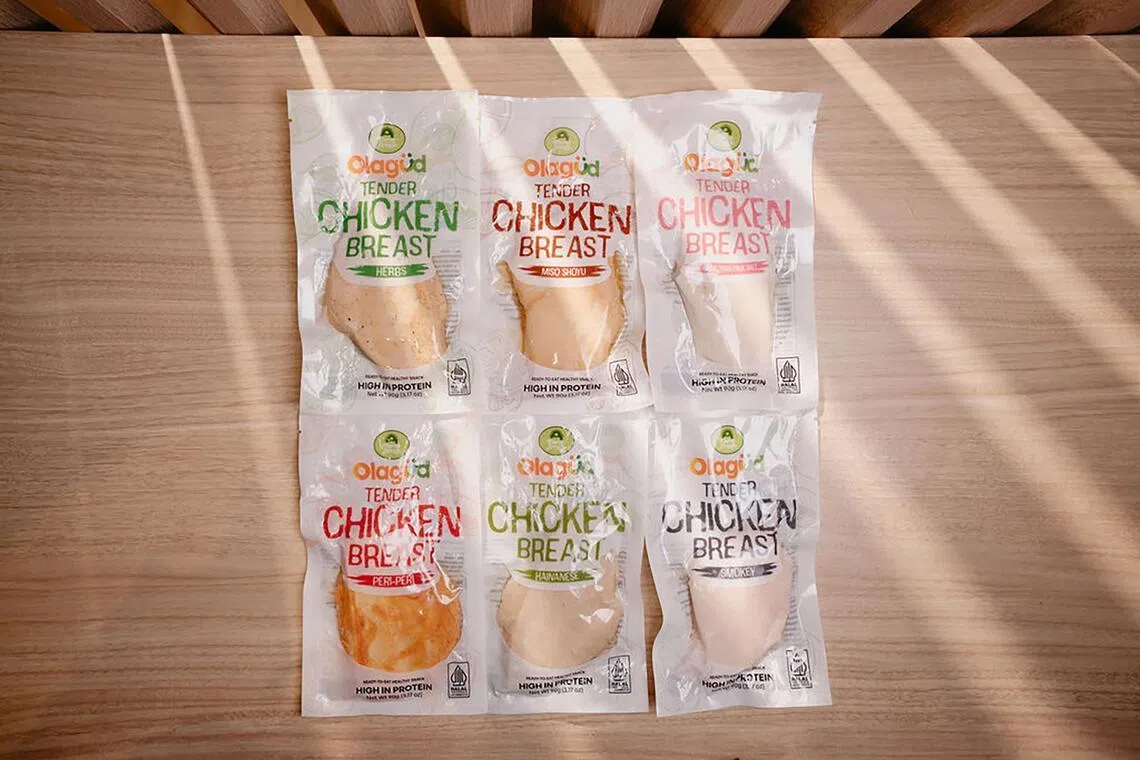
Supplier Toh Thye San is growing its online retail arm, Mr Farmer. Customers can buy ready-to-eat food such as cooked chicken breast.
PHOTO: TOH THYE SAN
Mr Hong’s Gyoren has jumped on the platform too, offering premium seafood. The two companies have been in partnership since 2024.
He says: “So, a traditional wholesaler will say, okay, I find my suppliers. I find my clients. I build a fleet of vehicles and a sales team to service clients. We thought: ‘Hey, can we do it differently? Can we do it more economically?’”
“So, I work as Toh Thye San’s seafood department. They’ve got the beef, chicken and pork, I do the seafood. It’s all on a totally open book, collaborative basis.”
Customers – whether retail or business – pay one delivery fee and receive both seafood and meat in one consolidated delivery for each order.
Both Shiki and Soshinsen are also looking to grow their online and offline retail businesses.
“Customers require more servicing, but the payment is immediate and straightforward,” Mr Lian says.
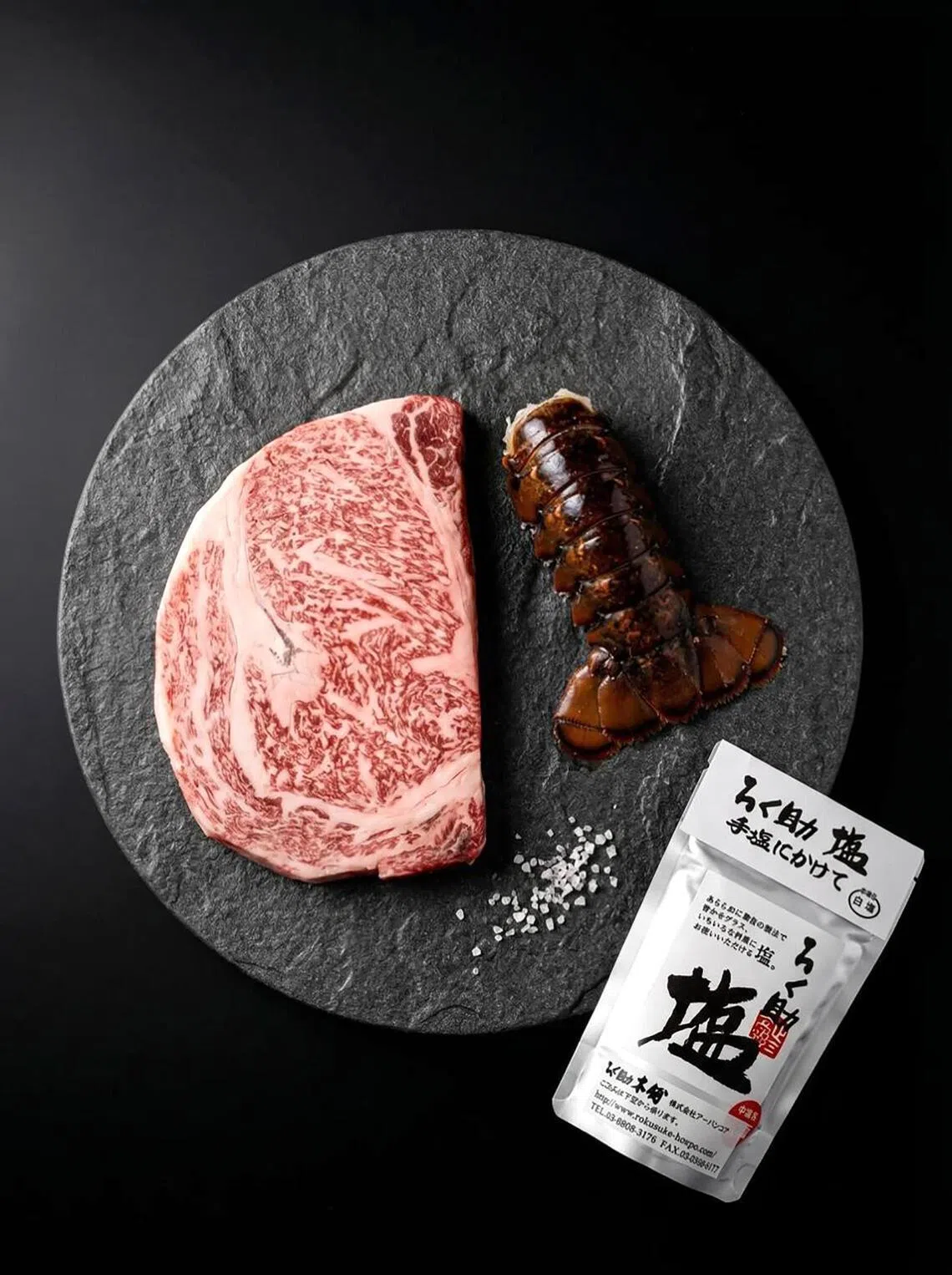
Japanese ingredient supplier Shiki is running a Parents’ Day promotion, offering seafood or beef sets priced from $95.
PHOTO: SHIKI
He is running a Parents’ Day promotion until July on his online retail site (shiki.sg). Priced from $95 a set, they contain combinations of seafood, steak and seasonings such as high-end salt.
Ms Tan says Soshinsen is working on having its own retail space. “Ultimately, we feel that a multi-channel approach is key, when it comes to the retail segment. It’s a platform for us to build trust with new customers as well.”
Meat Co, which supplies about 600 restaurants and hotels, already has two retail stores. The one at Cluny Court opened in 2023, and the second, at Paragon mall, opened in October 2025.
Mr Chua is beefing up the takeaway and eat-on-the-go offerings to give customers savoury snack options, and a way to taste his wares before they commit to buying the raw meat to cook at home. In May 2026, he will launch meat pies at his Paragon store.
Data from international market research firm YouGov’s Singapore Dining Out Report 2025 shows that one in three Singaporeans say they are dining out less often than they did a year ago. Some 65 per cent of those who are eating out less give rising restaurant prices as a reason.
Other challenges include the Iran war driving up costs, and the possibility that people might go in droves to eat and shop in Johor Bahru once the Rapid Transit System linking the two cities becomes operational in early 2027.
Mr Lian says that bigger restaurant groups and hotels are faring better, due in part to MICE events, although orders are not back to pre-Covid-19 levels.
He adds: “Smaller establishments have not been doing well, mainly because of the rising costs. We see many of them struggle to keep their customers while maintaining a high level of service and quality.”
Mr Chua says the way forward, for him, is to keep an eye on the bottom line. He checks his books twice a week.
He says: “You have to be very sharp on the credit, now more than ever. I tell my team that if we don’t get payment, we are giving away the product.
“Why do we work so hard to give away product? If we are working hard, make sure we’re working hard for the right customers.”
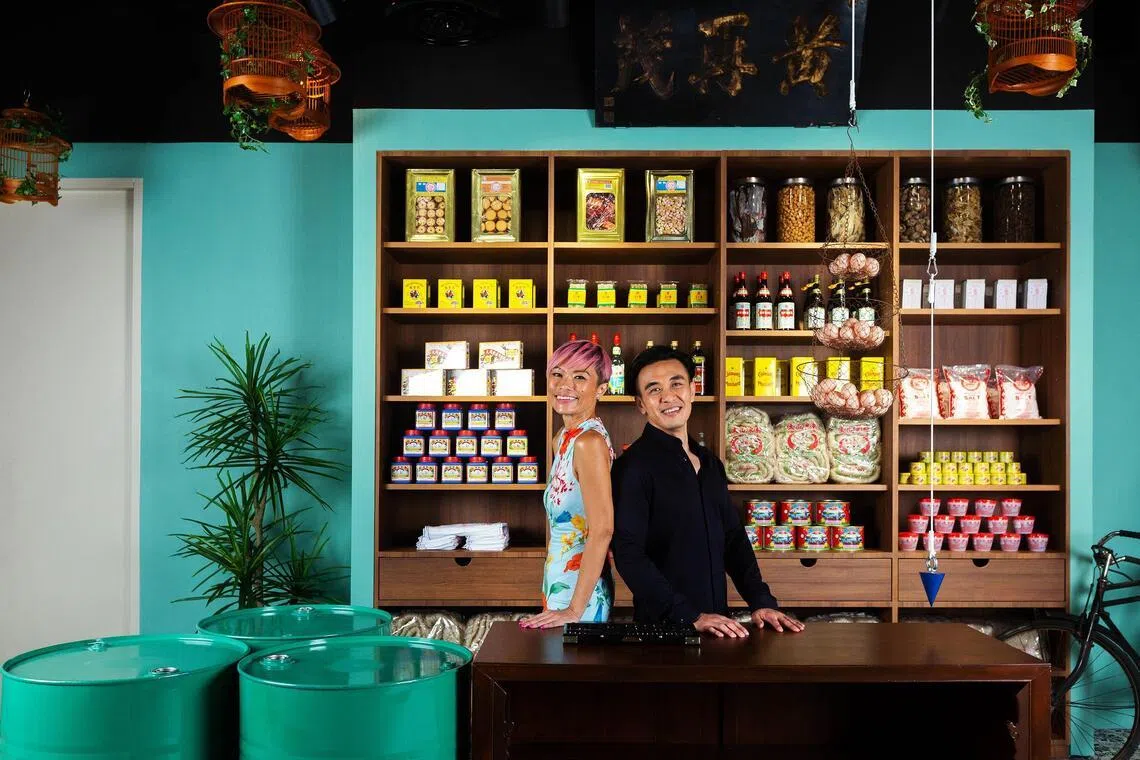
The Ng siblings, Nichol (left) and Nicholas, who bought over their family’s food distribution business, Ng Chye Mong, and renamed it FoodXervices.
PHOTO: COURTESY OF NICHOL NG
The message from food service supplier FoodXervices on March 26 via various channels was stark. “We have lost all access to our warehouse at 218 Pandan Loop with effect from today. With that, we are unable to obtain the goods required to fulfil everyone’s orders.”
Ms Nichol Ng, 48, who ran the business with her brother Nicholas, 47, tells ST that liquidators are now winding up the business. She has been working to match long-time brand partners with distributors here. Most of the remaining 50 staff have found new jobs, she adds.
And just like that, the business her Teochew grandfather started is gone.
The late Mr Ng Lim Song came to Singapore from Shantou, China, in 1934, after his first wife died. He opened a provision shop in Rochor Road selling shark’s fin, dried seafood and other dried provisions. He remarried and had nine children – six sons and three daughters.
One of the specialities of the business, called Ng Chye Mong, was Teochew braised duck, which Ms Ng’s grandmother would cook. He sold it to other food businesses.
In the 1960s, after Singapore became independent, the company became known for supplying Western food products such as HP Sauce to places such as the former Cockpit and Mandarin hotels. It soon became an established name.
Ms Ng says her uncle Ng Cheng Hai, one of the directors of the company, took pride in service, making deliveries himself on a bicycle.
“We had the DNA to help people to source,” she says. “Most chefs didn’t know where to get stuff. Back then, there was no internet or Google. So they would call Ng Chye Mong to ask for what they needed. Our product range kept expanding.”
Ms Ng’s father, the late Mr Michael Ng, left his brothers to run a food distribution business and ventured into new territory.
She recounts: “My daddy went to do crazy stuff. At our peak in the 1990s, we had 40 companies in 25 countries. He was distributing cigarettes, alcohol, Walkmans and Swatch watches, building bungalows, running a helicopter service in India and even opened a duty-free shop in the Maldives.”
He also produced movies in Hong Kong, including He’s A Woman, She’s A Man, the 1994 film starring the late Leslie Cheung.
But the 1997 Asian financial crisis wiped it all out. The only thing left standing was the family’s food distribution business.
In 2007, Ms Ng and her brother bought it over for $5 million, renamed it FoodXervices, and paid their uncles and the old company back with the profits over an eight-year term.
By 2019, FoodXervices had grown into a $65 million portfolio of food-related companies with 5,000 clients, including Shake Shack, Marina Bay Sands (MBS) and Singapore Airlines. Its product range grew from about 1,000 to 5,000 items. It had 248 employees.
She describes the early years of FoodXervices as “golden years for food service companies”.
Big brands, she adds, decided to appoint distributors. In 2008, FoodXervices became the distributor for Kimberly-Clark, which manufactures toilet paper and napkins, among other things.
“Back in the day, it was unheard of that a food company would take on a non-food distributorship,” she says. “But we supplied all the hotels and those were golden years for Kimberly-Clark. There were no competitors, no China brands.”
Along the way, the siblings also set up The Food Bank Singapore, a non-governmental organisation (NGO) which collects donated food and redistributes it to needy recipients, in 2012. It is now managed independently and is not affected by the winding up of FoodXervices.
The company also started supplying hawker stalls in 2020, and set up Backyard Productions in 2021, to consolidate and supply Singapore-grown produce to restaurants.
In 2016, FoodXervices was running out of warehouse space and found a site in Pandan Loop. Construction, which cost $50 million, began in 2018.
The 250,000 sq ft building had warehousing space, co-working offices, shared kitchens that businesses could rent and a dormitory. The company moved into the new facility in December 2019, shortly after Ms Ng gave birth to her fourth child.
In January 2020, the Covid-19 pandemic hit. FoodXervices’ revenue, which was $5 million a month, went down to $500,000.
“Unlike the rest of my peers, who had some retail business, mine was all food service. No SATS, no MBS, no nothing. No hotels. Everybody was shut,” she recounts, referring to her former clients, the airport service company and the integrated resort.
Meanwhile, she had products languishing in storage, shipping containers with more products stuck at sea and electricity bills that amounted to $150,000 a month. Still, she says, she was able to retain her employees, thanks to government support.
It was in 2022, she says, that the bank “started panicking”.
She says: “We’re an SME (small and medium-sized enterprise), we cannot manage such a huge asset on our balance sheet. So, the bank said it would grant us the building loan, but we had to get an investor in to help offset certain things. Where could we find an investor?”
In 2023, she says the bank forced FoodXervices to sell the building and, in November 2024, sold it to an Australian fund. The money paid off the loan.
But five other banks cut the company’s credit lines. Without this, she says she could not buy products to bring in revenue.
Ms Ng, who had sold her home and put the money into the company, asks: “What went wrong? Did Nicholas and I spend too much on digitisation and sustainability? We were upskilling all our staff and even put our effort into building an NGO from scratch.
“We were the poster boy and girl of this trade. But the truth is that we were making less profit than before. Maybe I should have listened to my late father, who said: ‘Don’t spend on these kinds of things, like doing charity.’”
Ms Ng had gone through this before, when her father lost everything in the Asian financial crisis. She was 17 at the time, and remembers the banks coming to seize their home. They had one hour to vacate it.
Her family lived through that.
“I continued what my family started out of responsibility,” she says. “That has carried me through. So I guess now it’s what do I want to do and what can I do?”
One idea she is mulling over is being a “CEO for hire, someone who can guide others looking to start businesses of their own”, if there are takers. Ms Ng, whose kids are aged seven to 14 and whose husband works as a flight attendant, says she looks forward to “climbing the next mountain with gusto, impact and purpose”.
She adds: “We have walked the talk, we have fought passionately with our best. So, hopefully, when we turn 50, we will have created a new frontier for ourselves, having earned this ‘PhD’.
“It’s important to understand that failure is a comma in this chapter, not a full stop.”
Upcoming Events
