
 The exchange for the debt economy

Key Takeaways
- Passive-income layering introduces heterogeneous ownership, governance, and transfer constraints that frequently sit outside trusts unless assets are properly titled and agreements are aligned.
- Operational control can fail despite valid documents when LLC agreements omit incapacity provisions, partnerships restrict transfers, or properties remain in personal names.
SHOW MORE
Physicians are earning in new ways, but outdated estate plans can fail in practice — not just on paper.
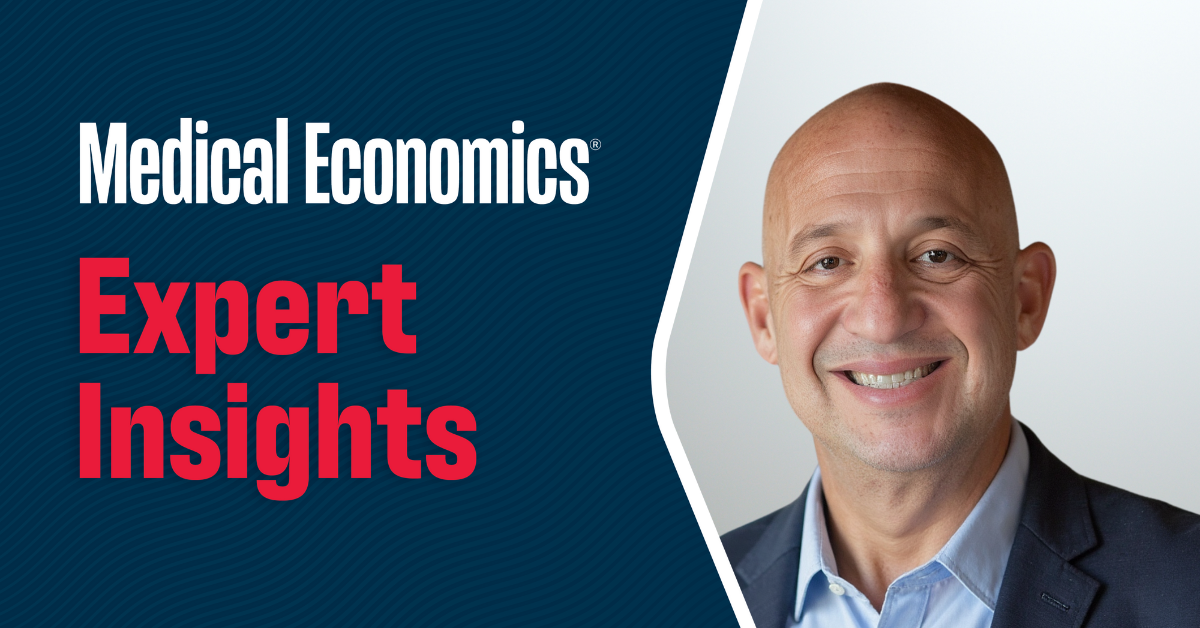
Howard Enders: ©The Estate Registry
Beyond clinical income, many physicians now own rental properties, hold equity in surgery centers, participate in real estate partnerships, or run digital ventures that generate revenue with minimal day-to-day effort. Passive income has become their stabilizing strategy as it can smooth out career volatility and create long-term upside.
The problem is that passive income changes the structure of a physician’s financial life faster than most estate plans are built to handle. Often, it starts as a straightforward plan tied to a practice and a predictable income stream. Over time, it can easily become scattered across entities and platforms. When that happens, an estate plan that once felt solid can break down in practice, even if it remains technically valid on paper.
The risk isn’t whether the documents are legally sound. It’s whether your spouse, trustee, or executor can actually step in and keep things running, because the more income streams you add, the more moving parts your family has to locate and manage.
Passive income creates complexity most estate plans do not anticipate
Most estate plans are drafted during a stable stretch of a physician’s career, when the balance sheet is simple enough to capture in paperwork.
Passive income does not show up that neatly. It builds over time. Normally, one rental property often turns into two. A surgery center investment naturally comes next. Perhaps a minority stake in a private venture follows. Some physicians have consulting opportunities that become recurring. Each decision makes sense for a long-term plan, but each one adds a new asset type with its own ownership rules, paperwork, and transfer limits.
The estate plan doesn’t update itself as that complexity grows. Many physicians assume that a trust automatically covers everything they own. It does not. A trust governs only what is properly titled into it or what it clearly controls through aligned agreements.
This is where plans fail in practice. Properties stay in a personal name. LLC operating agreements stay silent on incapacity. Partnerships restrict transfers. These details decide whether wealth moves smoothly or gets stuck, and income that should keep flowing can stall when no one can prove control quickly enough.
The hidden risk is digital fragmentation and access failure
Estate plans are still built around documents, but most passive income is built around access. A trust, a will, and powers of attorney can assign authority cleanly, but the cash flow often runs through platforms that require account-specific processes that only the physician has ever handled. When those credentials and workflows are not mapped, legal permission can exist without operational control.
That mismatch shows up quickly because modern income streams do not live in a single place. In practice, the portfolio becomes a scattered network of portals, contacts, and settings, not a neat stack of accounts that an executor can easily step into.
This is where plans fail under real conditions. Distributions stall because no one can access the portal to confirm ownership or update banking. Accounts freeze while institutions wait for documents that take weeks to assemble, and income that should continue without interruption gets trapped in administrative delay. In these cases, the estate plan may be technically valid but unusable. Passive income stays passive only while the owner is alive to keep the system running. Without a clear access and continuity plan, everything becomes fragile.
Building an estate plan that works in real life
The first 72 hours after a death or incapacity are when the estate plan either keeps moving or starts stalling. Mainly because that’s when bills still hit, distributions are still scheduled, tenants still call, and partners still expect responses.
A binder of documents does not handle these matters or calls. The plan has to name specific operators, aside from heirs. Every income stream needs one person who can act immediately and a backup if they cannot. Spell out who can sign for each LLC, who can approve expenses, who communicates with partners, and who can change banking instructions for distributions. If no one has clear authority on day one, families may be able to inherit assets but will face increased expenses from late fees, missed rent, delayed distributions, and other avoidable conflicts with partners.
It is also best to test the friction points that slow families down. For example, if a partnership requires consent to transfer, list the exact person to contact and the steps required. If an operating agreement forces a buyout, document the trigger, the valuation method, and the timeline. If a lender requires an immediate signer, name the authorized successor and keep the loan contacts in the same file as the note.
That level of specificity gives your successor a defined set of actions instead of forcing them to reconstruct how everything works.
Howard Enders is the Chief Operating Officer of The Estate Registry, where he leverages his extensive expertise in operations and management to drive growth and innovation. A graduate of the University of Delaware, Howard furthered his education at Widener University School of Law, equipping him with a strong foundation in legal and regulatory matters.
Upcoming Events

 RMAi-Certified Debt BuyerThe exchange for the debt economy